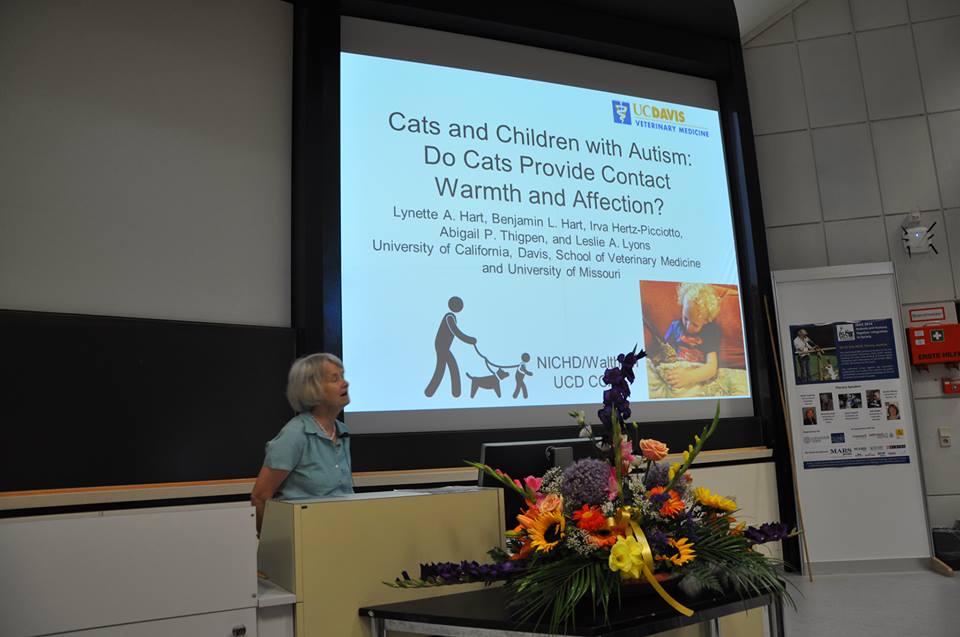

Cats and Children with Autism: Do Cats Provide Contact Warmth and Affection?

Presented by Lynette Hart, ISAZ Conference University of Vienna, Austria                                                    University of California, Davis

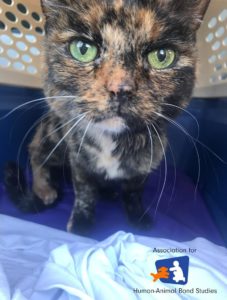
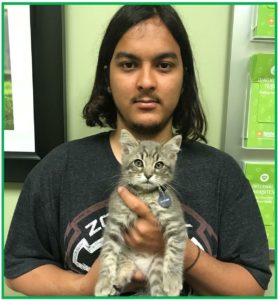
This project was based on the proposition that children with autism could benefit emotionally, and perhaps cognitively, from the warmth and affection that might be supplied by an appropriate pet cat. Even the most caring parents cannot be expected to supply the round-the-clock contact affection that might be expected of some cats. Before considering a project where a kitten would be placed with a family that has an autistic child, for study of the therapeutic effects, it was necessary to determine if cats that already share a home with an autistic child can be affection and non-aggressive to the child, and if the the autistic child likes to hold the cat.

The results reveal that these cats were not aggressive, and were generally affectionate, with the autistic children, albeit noticeably less affectionate than with typical children.  Autistic children generally liked holding the family cat (some were even “crazy” about the cat). It now seems feasible to explore the therapeutic benefits of placing a well-selected cat (kitten) with a family with an autistic child in a controlled trial.

CATS

Companion Animals and Society: Past, Present, and Future

Presented by James Serpell. University of Pennsylvania, 2014 ISAZ conference Vienna, Austria

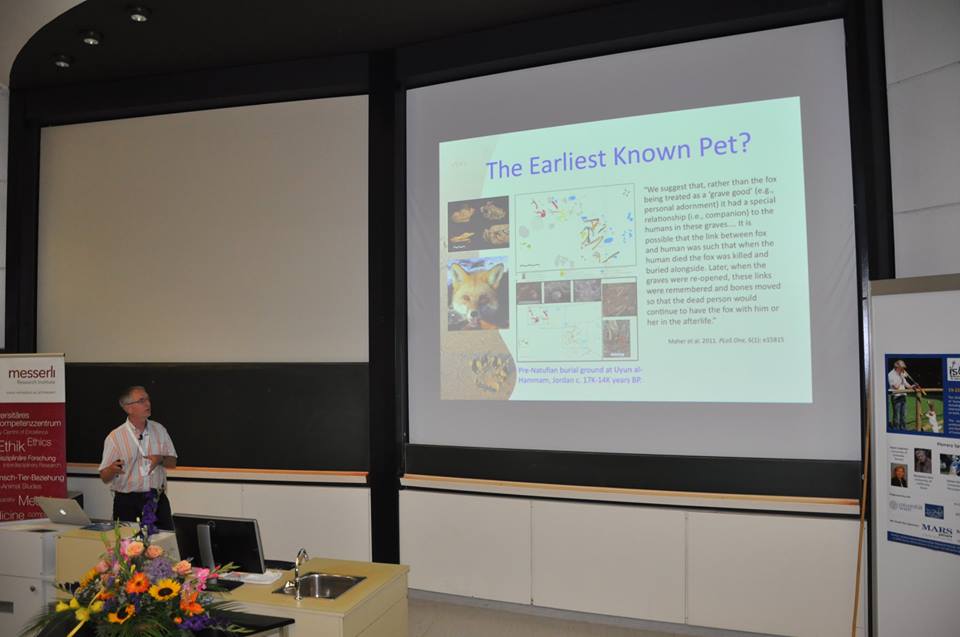
Companion animals or “pets” have a long history that precedes the domestication of animals. The earliest evidence of a probable human-pet relationship dates from the 17,000 – 14,000 year old site of Uyun al-Hamman in Jordan. The animal involved was neither a wolf or a wildcat, but a fox (Vulpes vulpes). whose remains were found in a human grave. Later buriel sites (c. 12,000 years BP) in Israel contained the remains of early wolf/dogs, while the earliest human-cat buriels, dating from roughly 9,500 BP, have been found on the Mediterranean Island of Cyprus. Since these early beginnings, the practice of keeping animals primarily or exclusively for companionship has waxed and waned throughout human history – popular and widespread in some cultures and periods, and rare or tabooed in others.

SERPELL

Join us on Twitter!


Look What’s New!

Association for Human-Animal Bond Studies is thrilled to announce its new program – Critter Companions

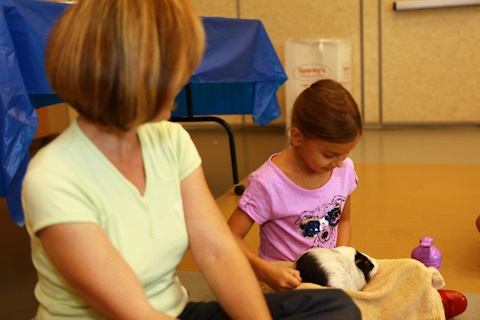
Unlike the traditional “Animal Presentation/Show” your child will get to touch, interact with, and learn about small companion animals (pets). Our goal at the Association for Human-Animal Bond Studies is for families to make the best decision for themselves and the animal BEFORE adopting a pet.   For answers to Frequently Asked Questions please copy and paste onto your browser http://www.animalbondstudies.org/2012/01/22/43/


An evaluation of perceptions of parrots as human companions

Poster presented by Pauleen Bennett and Scott O’Hara, La Trobe University, Victoria, Australia – ISAZ 2013

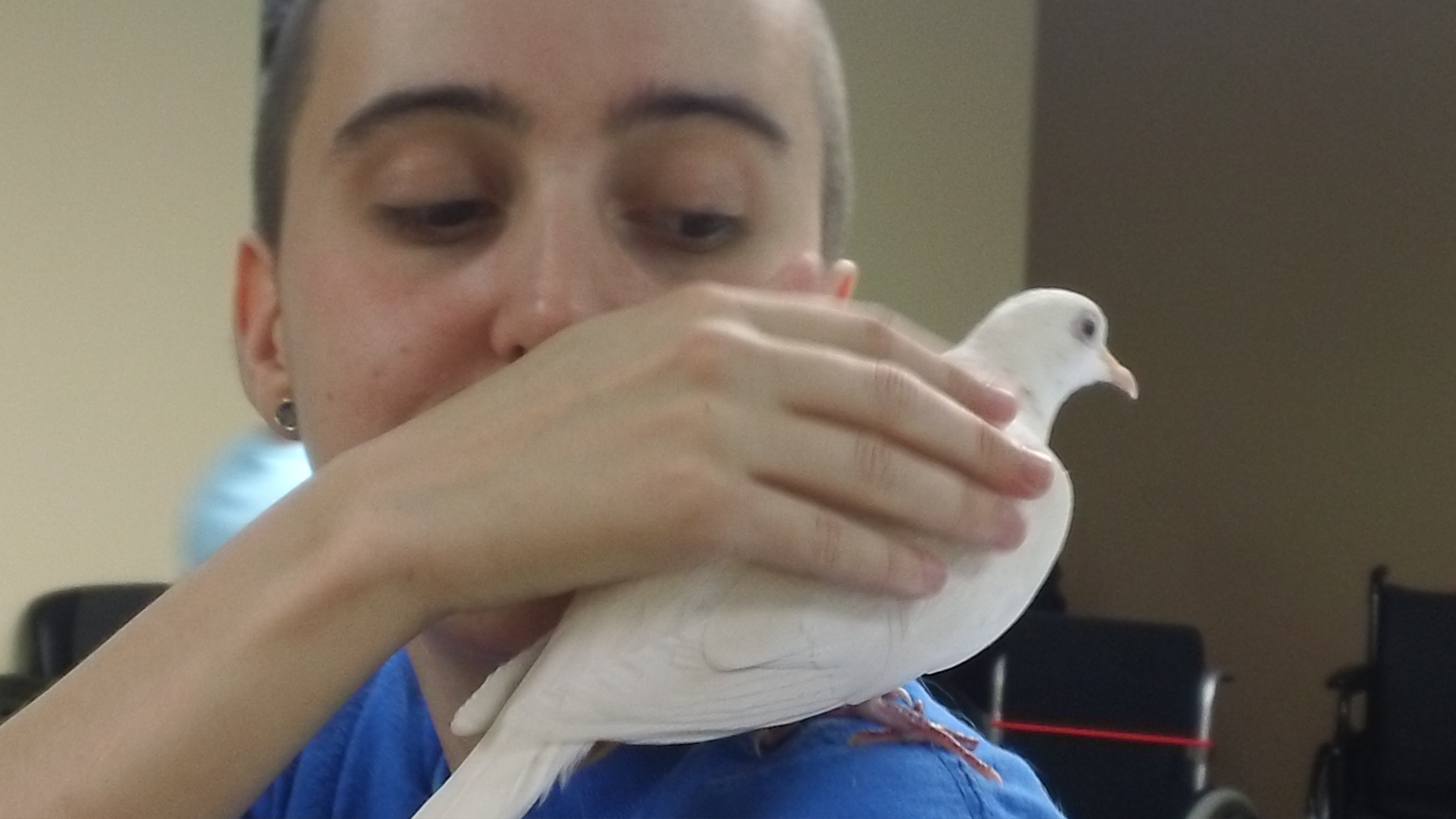
Research Examining relationships between humans and companion animals has focused on dogs and cats.  However, many other species are kept as companions, including parrots.  Parrots lack many of the “cute” and “cuddly” features that are believed to have promoted pet ownership throughout humans’ evolutionary history.  They are, however, described on numerous internet sites as being wonderful companions.

In this project, we examined parrot owners’ perceptions of parrots and compared these with the perceptions of other companion animal species.  We also examined whether parrot owners are psychologically attached to their pets.  Over 1,000 adult participants (86% female) completed on online survey that was distributed internationally.  We modified the Comfort from Companion Animals Scale to assess perceptions of parrots, dogs, doves, and goldfish and asked participants to complete the Lexingon Attachment to Pets scale in relation to various companion animal species.  Parrot owners perceived parrots to have excellent companionship qualities, equal to or better than dogs.  Non-parrot owners, in contrast, perceived parrots to have better companionship qualities than goldfish, but no where near the standard they perceived dogs to offer.

Participants who owned parrots reported being more enthusiastic about initially acquiring their pet, they spent more time planning and preparing for its arrival than owners of other species, and they were just as strongly attached to their birds as were owners of other species.  People who owned multiple pets tended to be more strongly attached to their parrots than to other animals, although the effect size was fairly small.

Attachement to a pet parrot was not correlated with various psychological outcomes, including loneliness, perceived stress and general wellbeing.  The results indicate that perceptions of animal companions may vary with experience, and that parrots may, for some people, provide a level of companionship equivalent to that provided by more popular pets.


Children exposed to intimate partner violence and concomitant animal cruelty

Presented by Shelby Elaine McDonald, Samantha Marie Brown, Frank R. Ascione, & James Herbert Williams, University of Denver – ISAZ 2013

Recent research suggests concomitant (naturally accompanying or associated) exposure to animal cruelty in families who have experienced intimate partner violence (IPV) may be an additional risk factor for mental health and behavioral problems in youth.  The current study had two aims: 1) to compare the severity and frequency of IPV exposure among youth who report or do not report exposure to animal cruelty in the home and 2) to compare the unique mental health and behavioral correlates of children’s exposure to IPV in the presence or absence of related animal cruelty.

Participants included 52 mothers and their children ages 7 – 12 who were receiving residential or non-residential services from a domestic violence agency and who reported owning a pet currently or within the past year. Independent samples t-tests determined children who reported they had observed a pet being hurt or killed in their home had significantly higher mean rates of directly witnessing multiple forms of IPV than children who had not witnessed animal cruelty.  Independent samples t-tests also determined that children of mothers who reported their partner had hurt or killed one of their pets were characterized by significantly higher bean rates of anxiety and depression symptoms, externalizing behavior problems, and PTSD symptoms as measured by t-scores on the Child Behavior Checklist (Achenbach, 2001).

Our analyses suggest children who witness harm to pets in the home are more likely to be directly exposed to multiple facets of family violence, and exposure to concomitant animal abuse may exacerbate the already potentially deleterious effects of childhood exposure to IPV on youth’s mental health and social functioning.  The results illustrate how addressing human-animal relationships can inform clinical assessment and intervention when working with families experiencing IPV.

In a clasped paw and hand: A case study of homeless people and their pets in Portland, Oregon

Presented by Emma K. Newton, Long Island University Global – ISAZ 2013

Research into the effect of companion animals on homeless people’s well being is limited.  Previous studies have focused on anecdotal information from homeless companion animal caretakers.  This presentation looks at the effect of animal companionship on homeless and low-income individuals in a period when the companion animals received free veterinary services.

Portland Animal Welfare Team is a non-profit organization located in Portland, Oregon that dispenses free veterinary medical services to the homeless and low-income of the surrounding area.  Participant-observation and statistical surveying occurred over the course of a three-month period between September 2012 and December 2012 during Paw Team’s monthly clinics.  All clients received at Paw Team during this period were asked if they had been previously seen at Paw Team and if so whether they felt their pets were healthier.  Clients were also asked about whether or not they felt that their pets physical health was affecting their own stress level and stress management as well as housing situation and and employment.

Analysis of the survey data shows a correlation between good physical companion animal health and decreased stress level in their caretakers.  Clients that were received consecutively by Paw Team during the survey period and who felt that their companion animal was in good health showed a decreased stress level and increased satisfaction with their housing and employment.

The findings from this study indicate a potential correlation between physical companion animal health and the emotional health of their human caretakers.  This would suggest an increased need for low-cost and free veterinary services for the homeless to address not only the physical health of the companion animal but also the emotional health of the caretaker.

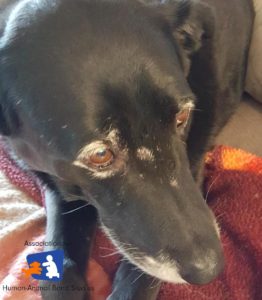
Exploring the “Black Dog” Syndrome: How Color Can Influence Perceptions of Companion Animals

Poster presentation by Heather C. Lum, Nicole Nau, and Kymberly McClellan, Penn State Erie, the Behrend College – ISAZ 2013

The “Black Dog” syndrome is a phenomenon in which black dogs and cats are seen as less desirable, less adoptable, and more likely to be euthanized.  This has been seen anecdotally by animal shelter workers for years but given the limited detailed records that many shelters keep, there is little empirical evidence of this.  This study examines how our opinions towards pets may be influenced by their color.

Sixty-five participants (24 males, 42 females, M=21.09, SD=7.20) completed the study.  Participants were shown pictures of both cats and dogs of varying colors and breeds and answered questions relating to perceived attributes about the animal including whether the animal was friendly, aggressive, and adoptable.

There was a main effect for friendliness.  Further analysis revealed that the white cat was considered the friendliest followed by the orange cat, while the black cat was the least friendly.  Similarly, the yellow dog was considered the friendliest while the brown dog was second, and the black dog was last.  This trend also held true for the perceived adoptability such that the lighter colored pets were considered more adoptable than the darker colored ones.  Lastly, there was a main affect for aggression.  The black dog was considered the most aggressive followed by the brown dog, and the yellow dog.

The results of this study do indeed indicate a bias in opinions of different colored dogs and cats.  By researching this problem, we may be one step closer to answering the question of why some dogs and cats are seen as less adoptable than others which could lead to adoption programs dedicated to addressing and resolving this issue through education and outreach.

Understanding the physiological processes that underlie dogs’ yawning in response to human yawns

Presented by Alicia Phillips Buttner and Rosemary Strasser, University of Nebraska at Omaha – ISAZ 2013

Over the last decade, there has been renewed interest in understanding the mechanisms that control contagious yawning.  Contagious yawning has been linked to empathy in humans and other primate species.  However, cross-species studies of contagious yawning between dogs and humans have reported less consistent findings.  It has been suggested that contagious yawning in dogs may be the results of stress rather than low-level empathy, since dogs produce “tension yawns” in uncertain situations.

We investigated the role of arousal in what has been interpreted as yawn contagion in dogs in order to better understand the physiological processes that underlie yawning in a stressful context.  Sixty shelter dogs were exposed to yawning and non-yawning control stimuli demonstrated by an unfamiliar human.  We took salivary cortisol samples before and after testing to determine the role of arousal in yawn contagion.  The cortisol levels of dogs that yawned only in response to human yawning remained elevated following testing, whereas other dogs had reduced cortisol levels relative to their baseline levels.

These findings are in contrast to current ideas in the dog training community that dogs perceive human yawning as a calming signal that reduces stress.  We suggest that arousal states may have a substantial influence on how human yawns are perceived by dogs.  Specifically, when a human yawn is presented in situations of uncertainty when arousal is high, as in shelter dogs, it may be perceived as a signal for stress.  Some dogs then yawn as a means of displacing internal anxiety.  Therefore, yawning between humans and dogs may involve some communicative function that is modulated by context and arousal.